
. Supermarkets and EV charging as AI-optimized grid assets

. Supermarkets and EV charging as AI-optimized grid assets
Welcome!

Vor dem Hintergrund der EU-Ziele zur Klimaneutralität bis 2050 erforscht das Projekt STORE, wie Supermärkte als zentrale Akteure der Energiewende fungieren können. Sie sind nicht nur große Stromverbraucher, sondern bieten auch Potenzial, Energieerzeugung und -verbrauch intelligent zu verknüpfen.
Lorem ipsum dolor sit amet, consetetur sadipscing elitr, sed diam nonumy eirmod tempor invidunt ut labore et dolore magna aliquyam erat, sed diam voluptua. At vero eos et accusam et justo duo dolores et ea rebum. Stet clita kasd gubergren, no sea takimata sanctus est Lorem ipsum dolor sit amet.

Im Mittelpunkt steht der Smart Flexibility Energy Manager (SFEM), ein KI-basiertes System, das die Nutzung von Photovoltaikstrom optimiert, die Ladeinfrastruktur für Elektrofahrzeuge steuert und aktiv zur Netzstabilität sowie Energieeffizienz beiträgt. So macht STORE Supermärkte zu aktiven Knotenpunkten der Energiewende. Datenanalyse
Lorem ipsum dolor sit amet, consetetur sadipscing elitr, sed diam nonumy eirmod tempor invidunt ut labore et dolore magna aliquyam erat, sed diam voluptua.At vero eos et accusam et justo duo dolores et ea rebum. Stet clita kasd gubergren, no sea takimata sanctus est Lorem ipsum dolor sit amet.
Project Overview · Detailed Description

The challenges of climate change and its resulting consequences are motivating many countries to achieve the goal of climate neutrality. The countries of the European Union (EU) have committed to achieving this milestone by 2050. The implementation of this vision requires the use of innovative technologies, the integration of various renewable energies into the existing energy infrastructure, and the electrification of certain sectors. Reducing energy consumption and demand-driven distribution are also key aspects.
The STORE project focuses on supermarkets, which consume 56% more electricity than the rest of the retail sector. In addition, the project focuses on the steadily increasing demand for energy and charging infrastructure due to e-mobility in recent years.
The overall goal of STORE is to develop an AI-based Smart Flexibility Energy Manager (SFEM). This innovative system will enable to integrate large-scale electric vehicle charging infrastructure into supermarket operations and to use electricity generated by the stores themselves from photovoltaic systems. The aim is to improve both grid stability and energy efficiency. In this context, supermarkets are seen as potential ‘filling stations of the future’. The energy management solution developed in the project will be systematically developed, technically and economically tested, and optimised specifically for this scenario. The project, which is being carried out in Cyprus, Germany, and Tunisia, is working with the different local conditions to develop a robust and transferable solution.



The functions of the SFEM are designed to incorporate or support the achievement of these objectives. The data for the development of the SFEM will be collected during ongoing market operations and thus reflect reality. As part of this, a detailed market analysis will be carried out for the three countries to identify potential new sources of revenue in electromobility and electricity grids. This analysis will feed into the development of multi-layered business models. To ensure effectiveness, the real data will be combined with data from virtual simulations. SFEM’s energy management system will use advanced scientific methods to optimise load scheduling, energy storage, and flexibility services. A professional transfer concept will ensure communication at local, national, and international levels.
Within the overall project, Technische Hochschule Ingolstadt (THI) is responsible for coordinating the project network and thus plays a central role in planning, organization, and communication within the consortium.
KI-gestützte Steuerung aller Energieströme im System
Zentrale Energiezelle für Erzeugung, Verbrauch und Verteilung
Erzeugung erneuerbarer Energie vor Ort
Zwischenspeicherung zur Flexibilisierung und Versorgungssicherheit
Intelligent vernetzte Ladepunkte für Kunden und Logistik
Systemoptimierung und Geschäftsmodellentwicklung


Institute of new Energy Systems (InES) is part of Technische Hochschule Ingolstadt (THI). One of the core pillars of THI’s internationalization strategy is the cooperation with African countries which is strongly driven by InES: For more than 20 years, InES has successfully coordinated cooperation projects with a focus on local business partners as well as universities in Africa. With a total of seven projects implemented or ongoing to date, InES collaborated with various local and international industry partners so far – all of them in the sphere of applied RE technologies.
» InES · THI
LaRINa (Research Laboratory of Smart Grids and Nanotechnology) · Université de Carthage, Tunisia is XXXX
»LaRINa · Université de Carthage, Tunisia
Steinbacher-Consult Ingenieurgesellschaft mbH & Co. KG · Germany is XXXX
»Steinbacher Consult · Germany
XXX · XXX, Zypern is XXXX
»XXX · XXX, Zypern


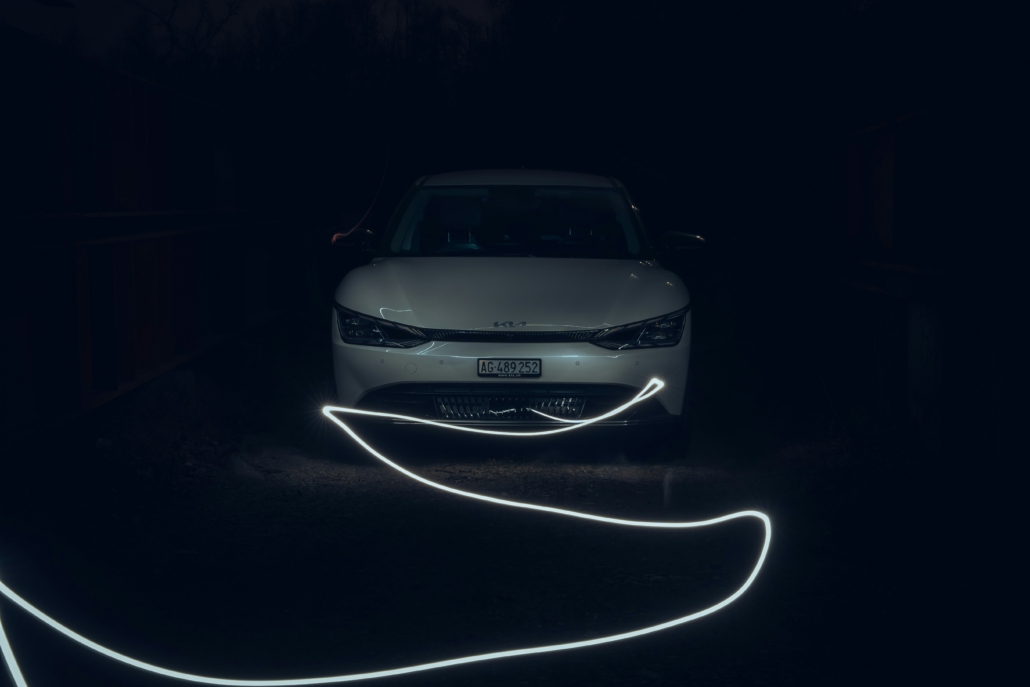







02/2025 Kick-off STORE
In February, our STORE project was officially launched with a virtual kick-off. Representatives of THI-InES and their project partners from the Ecole Nationale des Sciences et Technologies Avancées à Borj Cédria (ENSTAB), the University of Cyprus (UCY) and from Steinbacher Consult Ingenieurgesellschaft mbH & Co. KG. met here to get to know each other better […]